Dance ambassador Ophelia Onyeukwu
Impressions of dance at the August Festival 2025
An experience report
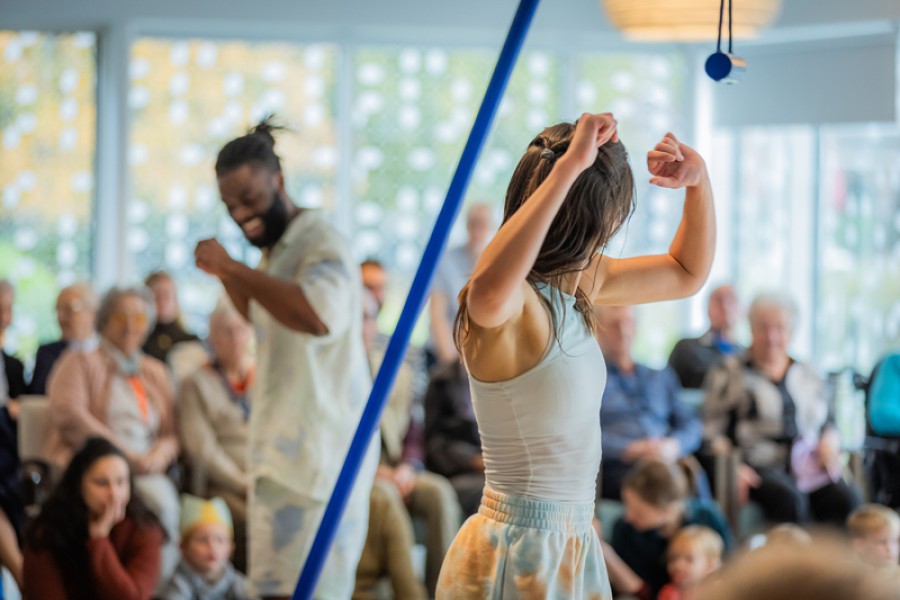
My visit to four pieces of the international dance festival ‘Tanz im August’ in Berlin showed me how different modern dance performances can be. Each of them touched me in their own way.
‘Dambudzo’ by Nora Chipaumire
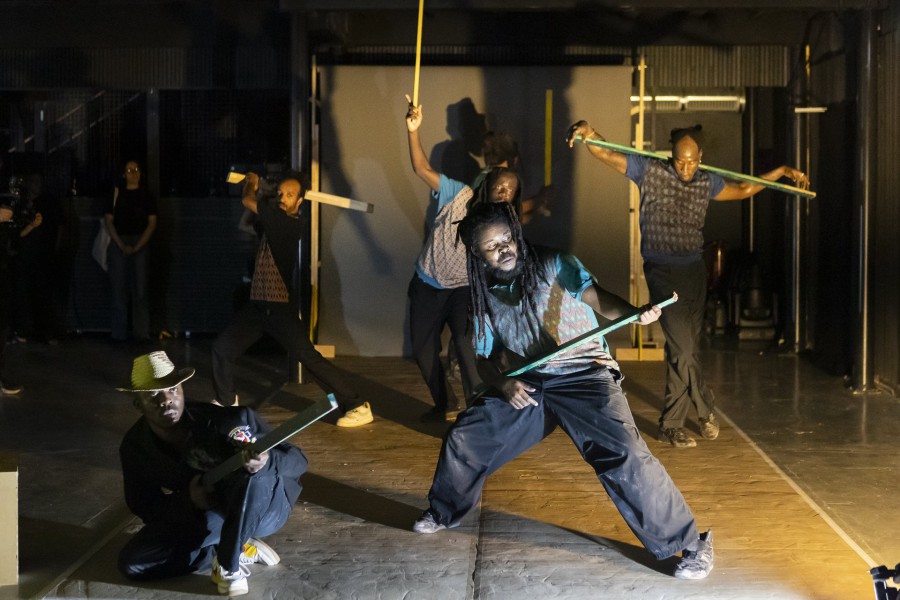
I have no words for the energy that ‘Dambudzo’ brought …This dance performance with sound installation has massively expanded my dance and performance horizon. Through the power of the dancers and the volume of the music, the dazzling energy in the room became more intense within two hours.
The audience was able to move freely in the rooms of the Alte Münze, the dancers too. They changed space and place, were once together, sometimes distributed among the people watching. We as an audience were initially inferior to the intense stimulus overload, but ‘Dambudzo’ made the stimulus overload normal. The dancers filled the rooms with indescribably powerful choreographies, polyphonic chants, sound installations and interactions with people watching us. The distance between the performers and us was close; Often there was direct eye contact and an honest smile to it, which emerged from both sides. But at the same time the performers seemed so unapproachable. Together they told a story about tradition, (neo-)colonialism and racism. ‘Dambudzo’ means ‘angry’ in Shona. Trouble with the past and the present.
The play focused on tradition, culture and true humanity. The stories of the bodies told through movements were simply real. Be it the clay-to-the-wall throwing, the choreographed dancing as a whole group or the seamless combination of dance and singing. I have no words for the energy that ‘Dambudzo’ brought …man must have experienced it up close.
"Tournament" by Adam Lindner, Ethan Braun and the soloist ensemble Kaleidoskop
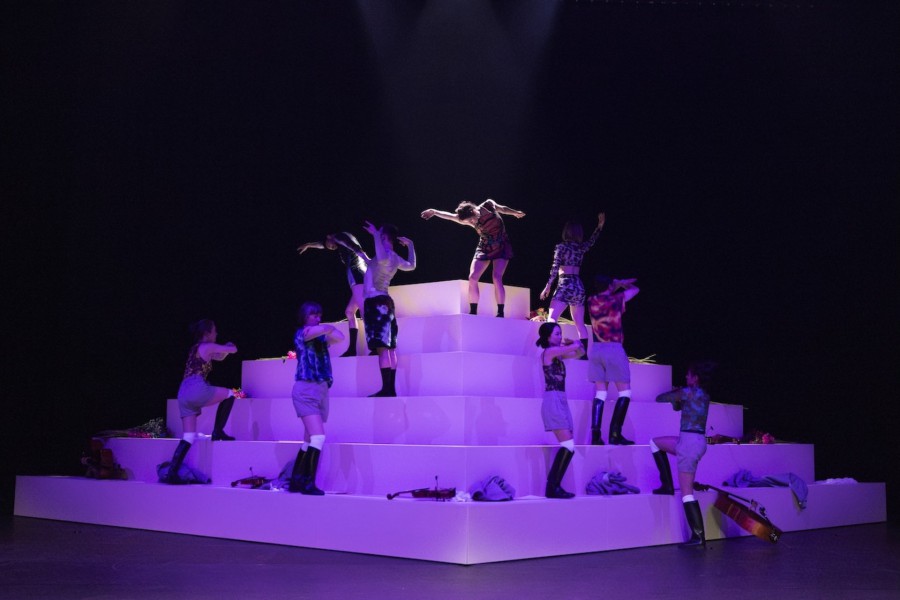
The performance in the radial system included dance and live music of violins and cellos. The combination of the two art movements was very successful. The tones adapted to the movements of the dancers and the movements to the tones. It was a perfect harmony, even if dissonances were played from time to time. The closeness between the musicians and the dancers was once tight and then again not present. I was particularly touched by the individual duos of dance and music, because they were a harmony of their own and yet at the same time in complete harmony between all. Towards the end of the performance, the musicians took off their instruments and changed their costumes. It was just electronic music. The new costumes were colorful. Now all performers looked the same. All moved together to the consistently fast tones. Although all of them resembled each other through the costumes, both groups of performers did not mix. The end was a closing movement. Planned and yet surprising.
While watching, I was touched by the close connection between live music and dance. But I was also fascinated by the respective artistic directions. In dance, the individual choreographed movements, in music the individual predetermined pieces for each instrument. As an audience, you got into a trance, through the sounds and the fast movements.
"Suan" by Nguyen + Transitory
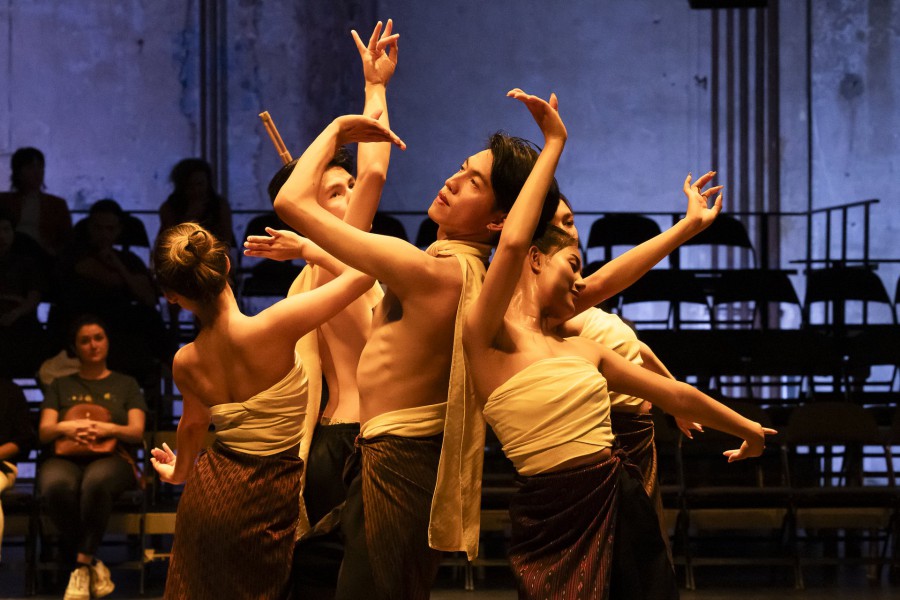
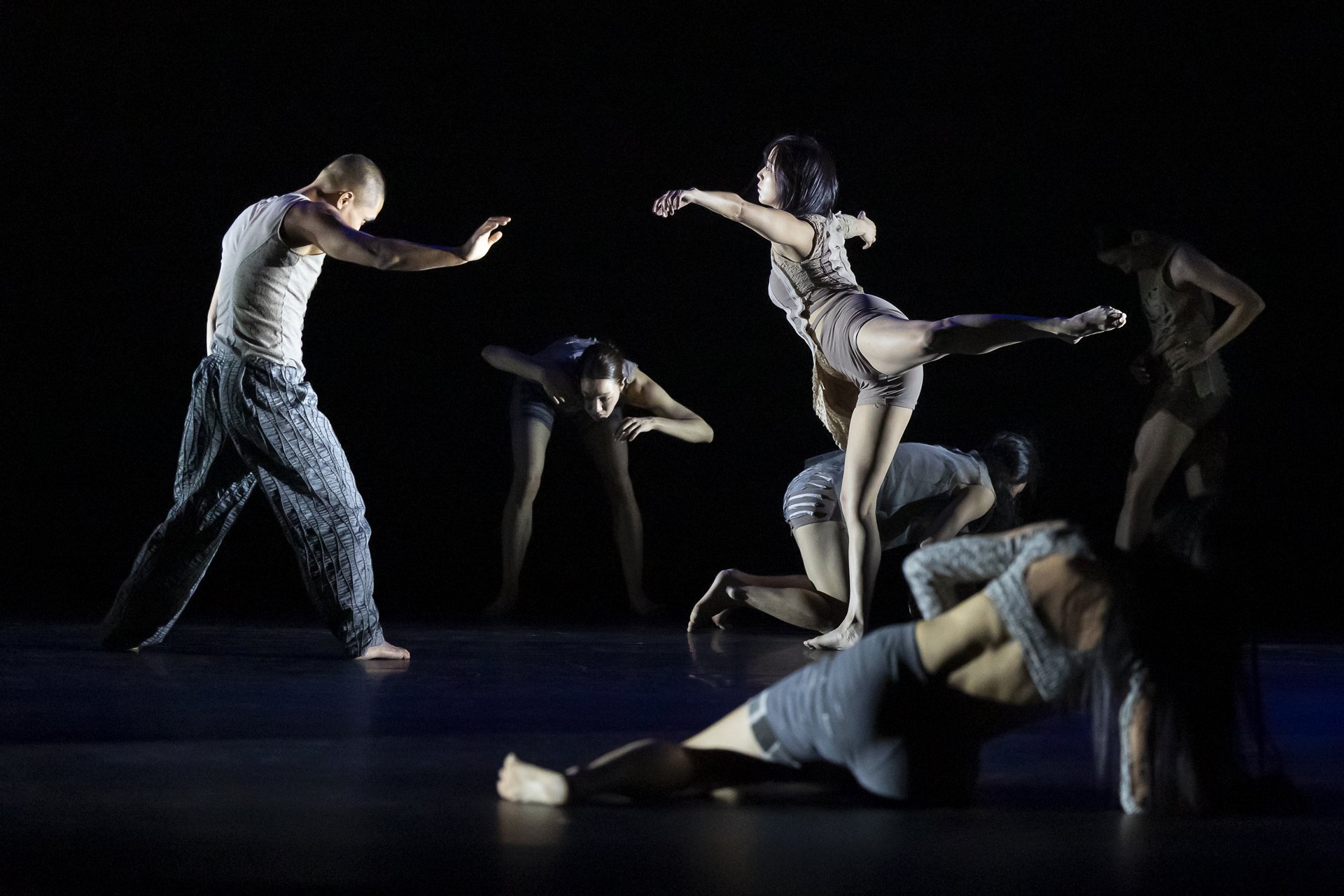
The third dance piece ‘Suân’ was an enormous contrast to ‘Dambudzo’. The dance quality of ‘Suân’ was fundamentally different. Here the five dancers moved quietly, in similarly lasting delicate movements. The focus was on the sensitivity of the hands and their great importance in dancing.
The five dancers performed together or in solo for live music. The audience sat in the form of an arena, which made the stage and the dance more approachable. I liked that a lot. The costumes were traditional robes, while the dance woven Thai tradition and modernity.
Two intimate moments, once between two women and then between two men touched me a lot. They were also in the tender quality of the dance piece, but with more action. The relationship of the respective couples was story-telling.
Another highlight for dance ambassador Jasmin and me was the end, where the dancers invited us as an audience to dance. This is how the piece left the message: Let’s dance together!
Jungle (Korea National Contemporary Dance Company/Kim Sungyong)
The contemporary dance piece by Korean choreographer and dancer Kim Sungyong was based on his philosophy that ‘dance is a language that cannot be described with words’. That's exactly what I felt after seeing his play.
The piece was full of energy carried by the constantly moving bodies. The one hour of performance felt timeless. As an audience, one could hardly escape the pull of the piece. The play told of existence, exclusion, commonality, societies and simply of life.
The sixteen dancers moved through the performance with a continuous force and tension to the fingertips. Some movements were so accurate and reminiscent of ballet steps, other movements were improvisation and flowing. Often the dancers were in close relationship with each other, but there was no contact and nevertheless there was a close connection with each other.
The Haus der Berliner Festspiele gave them a large stage on which fog inserts and impressive lighting effects were possible, which made the piece a whole.
I am still very impressed with the performance and take a lot of it for myself.
My impression:
I learned a lot from all four pieces of the ‘Dance in August Festival’. Not only new dance movements, but also new ways of thinking about social issues. I find it a wonderful opportunity to see dance pieces from different parts of the world through the festival. And ultimately, it shows me that dance is a language that we all share and that connects us. With dance, all the artists of the four pieces expressed their feelings, experiences and thoughts.